
PHONE:
0512-58581137 +86-13151198265
E-MAIL:
SKYPE:
zhujingke@hotmail.com
- All
- Product Name
- Product Keyword
- Product Model
- Product Summary
- Product Description
- Multi Field Search

Views: 0 Author: Site Editor Publish Time: 2026-06-14 Origin: Site


The global solar sector is growing rapidly. System longevity is more important than ever. Solar project managers frequently debate between extruded aluminum and hot-dip galvanized steel. Both materials offer distinct mechanical advantages. However, a wrong choice can lead to premature structural degradation. It can cause bloated installation labor costs. It might even result in catastrophic failure under extreme weather loads. You must carefully balance strict structural rigidity with manageable installation logistics. This guide provides an objective, side-by-side technical evaluation of both metals. We examine their weight profiles, tensile strengths, and environmental resilience. You will discover practical ways to avoid common engineering pitfalls. By the end, you will know how to choose the most resilient framework. You can confidently plan your next commercial rooftop or solar ground mounting project.
Cost vs. Labor: Galvanized steel offers lower upfront material costs, while aluminum significantly reduces logistics and on-site labor costs due to its lightweight nature.
Durability: Aluminum possesses superior natural corrosion resistance, making it ideal for coastal or highly corrosive environments.
Strength Profile: Hot-dip galvanized steel provides higher tensile strength, making it the preferred choice for heavy-duty solar ground mounting in high-wind or heavy-snow regions.
Decision Rule: Evaluate material choice through a Total Cost of Ownership (TCO) lens rather than just the initial per-ton procurement price.
Material density fundamentally changes how you plan a project site. Aluminum is incredibly lightweight. It weighs approximately one-third as much as steel. This dramatic difference alters your entire logistical approach. You spend significantly less money on freight transport. Trucks can carry more volume before hitting highway payload limits. Once materials arrive on site, handling becomes much easier. You often eliminate the need for heavy lifting equipment. Manual assembly accelerates safely and efficiently. Workers experience less physical fatigue when carrying aluminum rails across a sprawling job site.
Conversely, galvanized steel dominates when you need raw load-bearing power. It offers vastly superior rigidity and yield strength. You need high yield strength to span long distances between foundational posts. Steel allows for wider, safer spacing between these supports. This reduces the total number of foundation piles you must drive into the earth. Steel completely prevents structural sagging over these extended spans. It keeps the heavy solar modules perfectly aligned.
Extreme weather heavily influences material selection. High wind events and heavy snow loads place dynamic stress on an array. Steel excels under these extreme environmental pressures. Its structural rigidity makes it highly favorable for large-scale utility projects. Engineers must enforce strict deflection limits. If a frame bends too much, the delicate glass solar panels can suffer microcracks. Steel minimizes this hazardous bending. It provides a stiff, unyielding backbone for the array.
You must also consider thermal movement. Aluminum expands and contracts more than steel during extreme temperature swings. Engineers must account for this thermal expansion. They do this by integrating specialized slip joints in long array rows. This prevents the metal from warping the panels on hot summer days.
Tip: Always review the engineering drawings carefully. Request a comparative structural analysis from your manufacturer. Ask them to compare the required profile thickness for both materials. Aluminum often requires much thicker extrusions to match the span capabilities of steel. A thicker aluminum profile means more raw material, which can offset your expected cost savings.
Hot-dip galvanized steel uses a highly effective chemical defense. It relies entirely on a thick, bonded zinc coating. Manufacturers dip raw steel into molten zinc. This process creates a deep metallurgical bond. The zinc acts as a sacrificial anode. It absorbs corrosive elements before they reach the underlying iron. However, this defense mechanism requires an unbroken surface. If you scratch, cut, or drill the metal on-site, you expose raw steel. This exposed steel becomes highly vulnerable to rapid rust.
Aluminum handles harsh environments very differently. It does not need a secondary sacrificial layer. Instead, it naturally forms a microscopic, self-healing oxide layer. This oxidation happens instantly when the bare metal touches air. This barrier completely prevents further degradation. Aluminum requires no touch-up paint. If you cut an aluminum rail in the field, it immediately protects itself. Field modifications carry zero long-term corrosion risks.
You must evaluate your specific environmental conditions before deciding.
Coastal and High-Salinity Conditions: Aluminum dominates in these harsh areas. Saltwater spray aggressively attacks zinc. It will strip away a galvanized layer quickly. Aluminum ignores salt spray, maintaining its integrity indefinitely.
High-Humidity Climates: Aluminum remains completely stable in damp environments. Constant moisture cannot penetrate its oxide layer.
Inland and Aggressive Soils: Steel performs wonderfully in standard inland environments. However, underground soil chemistry varies wildly. Highly acidic or alkaline soils can eat away at buried steel posts. You must conduct geotechnical pull-tests and soil pH sampling. You will likely require thicker zinc coatings, such as G90 or higher, for aggressive soils.
Note: Beware of galvanic corrosion. Engineers often call this the bimetallic effect. It happens when dissimilar metals physically touch in a damp environment. Suppose you mount bare aluminum solar panels directly onto a galvanized steel Solar Structure. Rainwater creates an electrical bridge between them. The aluminum will rapidly corrode. You must use isolating rubber gaskets or specialized stainless-steel fasteners. These barriers break the electrical connection and save your framework.
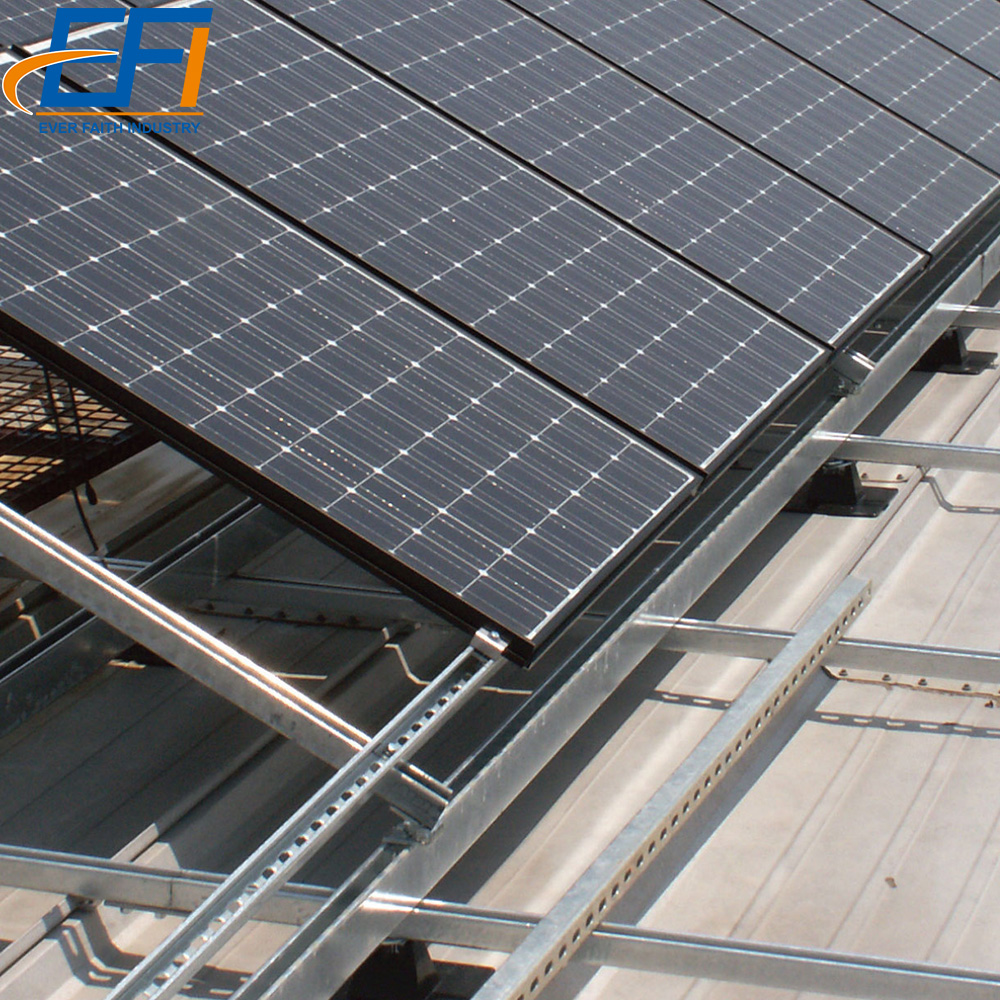
Proper material selection guarantees long-term stability for your solar array under diverse environmental loads.
Initial procurement expenses heavily favor traditional steel. Galvanized steel provides a much lower upfront price tag. It is significantly cheaper per pound than extruded aluminum. The global steel commodity market also experiences less extreme price volatility. This predictability helps developers forecast large project budgets safely. When you buy thousands of tons of material, these per-pound savings compound massively.
However, installation and labor costs tell a completely different story. Aluminum structures usually arrive at the job site highly prefabricated. They feature pre-slotted rails and modular click-in brackets. They are incredibly easy to maneuver. This ease drastically reduces your required man-hours. You avoid the need for on-site welding entirely. You do not need heavy-duty cutting torches or specialized metal saws. A small team can assemble an aluminum array very quickly. The money you save on hourly labor often pays for the higher initial material cost.
You must also budget carefully for long-term maintenance. Aluminum requires virtually zero structural maintenance over its entire 25-year lifecycle. You build it and leave it alone. Steel structures demand an active, ongoing maintenance schedule. You must dispatch technicians to inspect them periodically. Technicians need to look for zinc coating degradation. They must search for rust spots at high-stress connection points. You will spend money applying touch-up cold galvanizing paint over the system's life.
Tip: Always calculate the true "landed cost" for your solar ground mounting projects. Do not base your decision solely on the ex-works factory price. You must include complex freight logistics. Factor in the cost of heavy machinery rentals like rough-terrain telehandlers. Add up your local labor rates. A massive steel frame might look cheap on a spreadsheet but cost a fortune to install in a remote, uneven location.
Neither metal offers a perfect, universal solution for every single scenario. You should align your material choice directly with your specific application type.
Commercial Rooftop Systems: Aluminum is the absolute, undisputed standard for rooftops. Commercial buildings have extremely strict structural weight limits. A heavy steel frame could compromise the roof's structural integrity. Furthermore, hoisting heavy materials onto a multi-story building is dangerous. Lightweight aluminum makes craning operations safer and faster. The lack of rust also prevents ugly brown streaks from staining the sensitive EPDM or TPO roofing membrane.
Utility-Scale Systems: Galvanized steel securely dominates massive ground-level projects. The sheer volume of material needed demands cost efficiency at scale. Steel provides the necessary bulk and weight. It easily withstands heavy, dynamic wind loads sweeping across open terrain. Utility developers rely on steel posts driven deep into the earth for unyielding stability.
Carports and Elevated Structures: Developers frequently utilize a smart hybrid approach here. They use heavy galvanized steel for the primary load-bearing columns and main canopy beams. Steel handles the massive top-heavy weight securely. They then switch to lightweight aluminum rails for the actual panel mounting interface. This combination maximizes structural strength while keeping panel installation quick.
Visualizing material differences helps streamline your engineering process. We compiled the core metrics into a straightforward comparison table. You can use this matrix to evaluate your primary design priorities quickly before consulting a structural engineer.
Comparison Metric | Extruded Aluminum | Hot-Dip Galvanized Steel |
|---|---|---|
Upfront Material Cost | High | Low |
Material Weight | Low (approx. 1/3 of steel) | High |
Tensile Strength | Medium | High |
Corrosion Resistance | Excellent (Self-healing oxide layer) | Good (Depends entirely on zinc thickness) |
Field Modification | Easy (No protective touch-ups needed) | Difficult (Requires immediate post-cut zinc treatment) |
Ideal Use Case | Rooftops & Highly corrosive environments | Utility-scale ground mounts & High wind zones |
Note: You must always verify supplier compliance. Check regional structural codes carefully. In the United States, you must adhere to ASCE 7 standards for calculating wind and snow loads. Engineers must specifically tailor their structural modeling to the unique modulus of elasticity of the chosen metal. An aluminum frame deflects differently than a steel frame under the exact same wind pressure. Ensure your engineering team models these forces correctly.
Selecting a framework material dictates the long-term success of your energy asset. Neither material is universally superior. They simply serve different engineering needs. Galvanized steel remains the heavy-duty, highly cost-effective workhorse. It easily dominates utility-scale open-field projects where raw strength is mandatory. Conversely, aluminum acts as the premium, low-maintenance alternative. It serves perfectly for weight-restricted commercial rooftops. It is also the only viable option for highly corrosive coastal environments.
You must take deliberate, calculated actions to finalize your structural design. We recommend the following practical next steps:
Conduct a comprehensive, site-specific geotechnical and climatic assessment before finalizing blueprints.
Map out all local labor rates to understand how installation speed impacts your budget.
Request parallel engineering quotes from manufacturers for both aluminum and steel configurations.
A: Aluminum generally outlasts steel in harsh environments without needing any maintenance. Its natural oxide layer permanently prevents severe degradation. However, a galvanized steel framework can easily last more than 25 years in standard conditions. This longevity relies on an adequately thick zinc coating that remains largely uncompromised by field modifications.
A: Yes, you can drill into it. However, any field-cut or drilled hole permanently breaches the protective zinc coating. This exposes the vulnerable bare steel to moisture. You must immediately treat the affected area with cold galvanizing paint or a zinc-rich primer to prevent rapid rust formation and structural decay.
A: Yes, hybrid designs are highly common. Many developers use heavy galvanized steel for driven piles and main support trusses. This secures ground stability and lowers costs. They then utilize lightweight aluminum for purlins and module clamps. This intelligent mix balances overall cost, structural rigidity, and installation speed perfectly.

